Hyundai Motor Group, in collaboration with LG Energy Solution, has officially established a major electric vehicle (EV) battery cell production facility in Karawang, West Java. The joint venture company, Hyundai LG Indonesia (HLI) Green Power, plays a central role in Hyundai’s electrification strategy in Southeast Asia.
Also read: Autoini Team Test Drives Hyundai Ioniq 5 at PEVS 2025 Indonesia
Daily Output Reaches 120,000 Battery Cells
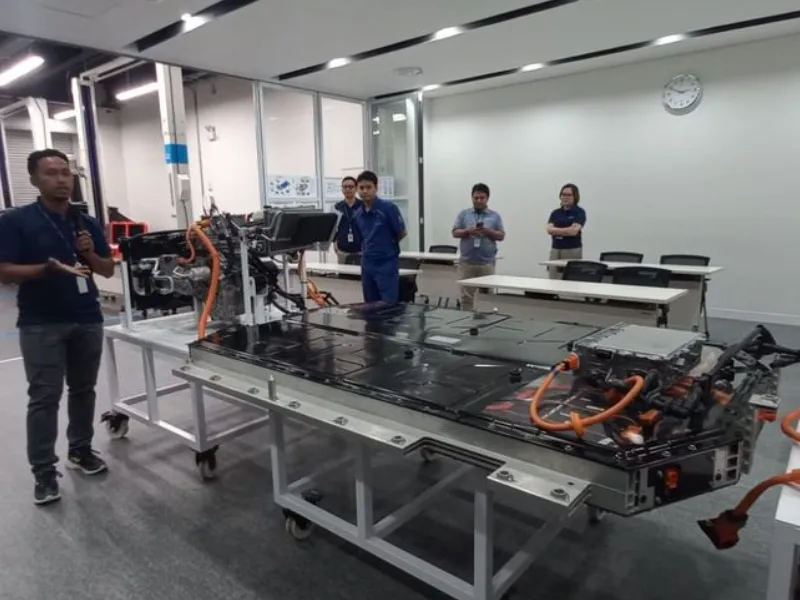
According to Ubaidah Jarrah from the Professional Cell Technology Team at PT HLI Green Power, the Karawang plant is capable of producing up to 120,000 battery cells per day. These cells are essential components in battery electric vehicles (BEVs).
“For HLI, the production capacity is 120,000 cells per day. For one Kona EV, 216 cells are needed,” said Jarrah during a visit to the facility on Wednesday, May 14, 2025.
Fully Localized Production for Hyundai Kona EV

One of the key benefits of this facility is the local production of the Hyundai Kona EV. The electric SUV is now fully manufactured in Indonesia—from the battery cells to vehicle assembly—making it one of the country’s most complete EV products.
Also read: Hyundai Unveils Next-Generation Hybrid Technology in Seoul
Export to Global Markets
Battery cells produced at the HLI Karawang plant are not only used domestically but are also exported to key markets. Hyundai confirmed shipments are made to South Korea and India, powering electric cars under both the Hyundai and Kia brands.
“Exports are only for Hyundai Motor Company, including Hyundai and Kia brands. Shipments to South Korea and India,” added Jarrah.
Production Capacity Reaches 10 GWh Annually
The factory which uses NCMA (nickel, cobalt, manganese, aluminum) cathodes in its lithium ion battery cells. At present the plant’s capacity is 10 GWh per year. That produces enough for about 150,000 electric cars annually.
Also read: Why Hyundai Recall the Ioniq 5, Ioniq 6, and Genesis G80 Electric Cars in Indonesia?
Conclusion
At the opening of this large-scale battery production plant, Hyundai and LG are positioning Indonesia as a key player in the global EV supply chain. This move supports the growth of domestic EV use and international exports. It highlights Indonesia’s rise in the green mobility era.