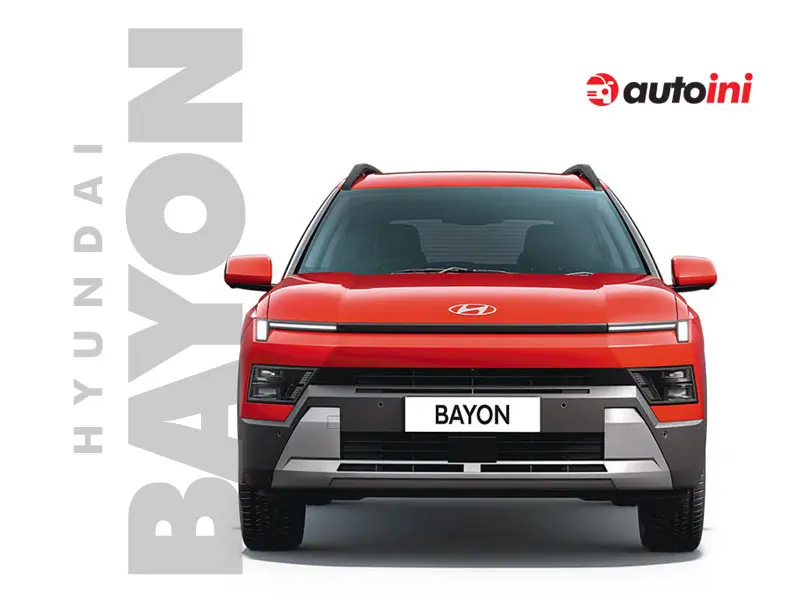
Autoini.com – The new Hyundai Bayon launched in India, adding another compact SUV to its growing lineup. Launched on October 26, 2026, the new model combines modern styling, advanced technology, and everyday practicality. Its starting price of around Rp190 million makes it an interesting option for buyers looking for a feature-rich SUV.
For Indonesian readers, the announcement is worth following because the Bayon could attract attention among buyers interested in affordable compact SUVs. However, the Indian launch does not mean the vehicle is officially available in Indonesia.
The estimated Hyundai Bayon price in IDR is around Rp190.5 million. This figure represents the converted Indian starting price and should not be treated as an official Indonesian selling price. Import duties, taxes, shipping expenses, and local distribution costs could significantly affect the final price if the vehicle were introduced in Indonesia.
The new SUV also offers a 1.5-litre petrol engine producing 115 PS, two transmission choices, a digital cockpit, and advanced driver assistance technology. Here is everything you need to know about its price, performance, equipment, and potential relevance to the Indonesian market.
Hyundai Bayon Price in IDR: How Much Does It Cost?
Hyundai launched the Bayon in India at an introductory starting price approximately Rp190.5 million.
| Price Information | Details |
|---|---|
| Estimated price in Indonesia currency | Around Rp190.5 million |
| Launch market | India |
| Indian starting price | ₹9,99,900 (ex-showroom) |
| Indonesian official price | Not announced |
| Vehicle category | Compact SUV |
The estimated price places the Bayon near the Rp200 million mark on paper. However, Indonesian buyers should not treat this figure as the expected showroom price.
Import duties, taxes, shipping expenses, homologation, distribution costs, and local specifications could significantly change the final price if the vehicle were introduced in Indonesia.
For now, the Indian price provides a useful international reference rather than a direct comparison with officially sold Indonesian cars.
ALSO READ
BYD Sealion 7 vs Tesla Model Y Indonesia: Which Should You Buy in 2026?
Hyundai Bayon Specifications: Dimensions and Practicality
The Indian-market Hyundai Bayon measures 4,245 mm in length, 1,810 mm in width, and 1,605 mm in height, including the roof rails. Its wheelbase measures 2,600 mm, while ground clearance is 205 mm. These dimensions give it a relatively substantial footprint for a compact SUV.
| Specification | Hyundai Bayon |
|---|---|
| Length | 4,245 mm |
| Width | 1,810 mm |
| Height | 1,605 mm, including roof rails |
| Wheelbase | 2,600 mm |
| Ground clearance | 205 mm |
| Fuel tank capacity | 43 litres |
| Boot capacity | Verify against the latest official specification sheet |
| Engine capacity | 1,497 cc |
| Maximum power | 115 PS |
| Maximum torque | 143.8 Nm |
| Transmission | Six-speed manual or iVT automatic |
The Bayon’s wheelbase is designed to provide useful cabin space for passengers in both rows. Meanwhile, its 5.16-metre turning radius could help when navigating tight urban streets and parking areas.
These figures suggest that Hyundai has focused on balancing cabin comfort with everyday usability. However, actual passenger comfort depends on seating position, cabin layout, and the needs of individual occupants.
Hyundai Bayon Engine: 115 PS Petrol Performance
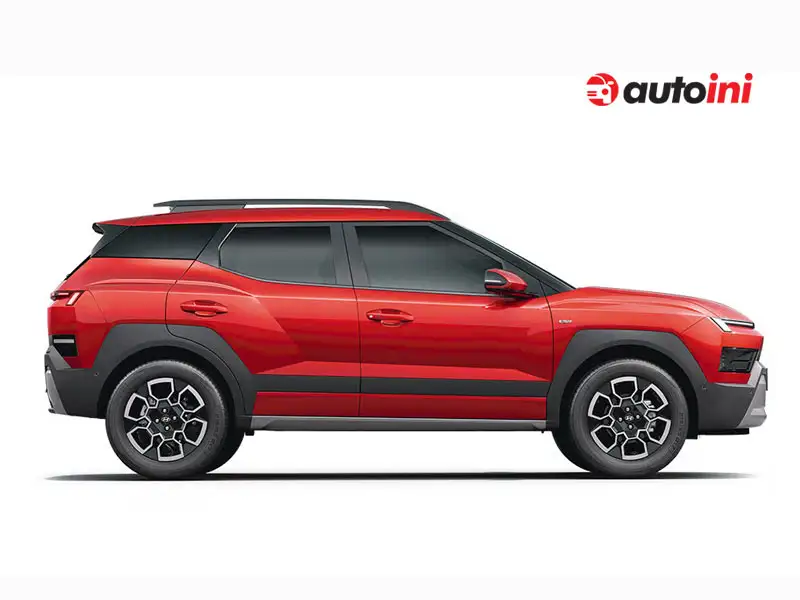
The Indian-market Bayon uses a four-cylinder, 1.5-litre MPi petrol engine. It produces 115 PS of maximum power and 143.8 Nm of peak torque. Buyers can choose between a six-speed manual transmission and an Intelligent Variable Transmission (iVT).
The manual option should appeal to drivers who prefer direct control over gear changes. Meanwhile, the iVT is designed to provide a smoother driving experience, particularly in stop-and-go traffic.
The automatic version also receives Dash Boost Mode for improved responsiveness and Sporty Drive Tech for a more engaging acceleration experience. Paddle shifters and Eco, Normal, and Sport driving modes add further flexibility.
ALSO READ
EV Battery Cost in Indonesia: Is It Really Half the Car’s Price?
Hyundai states that more than 600,000 vehicles equipped with this 1.5-litre MPi engine have been sold in India since 2020. This provides a useful indication of the powertrain’s established presence in that market.
However, buyers should not expect sports-car performance. The engine and transmission combination is intended to balance everyday usability, smooth operation, and practical driving needs.
An important detail is that the Indian-market Bayon specifications differ from those reported for other international markets. Buyers should therefore check the market-specific engine and equipment rather than assume every Bayon has the same powertrain.
Hyundai Bayon Interior and Comfort Features
| Feature | Details |
|---|---|
| Digital Instrument Cluster | 12.3-inch digital display |
| Infotainment System | 12.3-inch touchscreen with connected navigation technology |
| Smartphone Connectivity | Wireless Android Auto and Apple CarPlay |
| Voice Assistant | Generative AI voice assistant featuring Perplexity intelligence and SoundHound AI voice technology |
| Connected-Car Technology | Hyundai Bluelink with more than 70 connected features |
| Audio System | Bose premium sound system with eight speakers |
| Front Seats | Ventilated front seats |
| Driver Seat Adjustment | Eight-way electrically adjustable driver’s seat |
| Sunroof | Panoramic sunroof |
| Rear Seat Comfort | Two-step reclining rear seats and a rear centre armrest with cupholders |
| Climate Control | Fully automatic temperature control and rear AC vents |
| Wireless Charging | Wireless smartphone charging |
| Push-Button Start | Smart key with push-button engine start |
| Boot Capacity | 505 litres |
Hyundai Bayon Technology and Connectivity
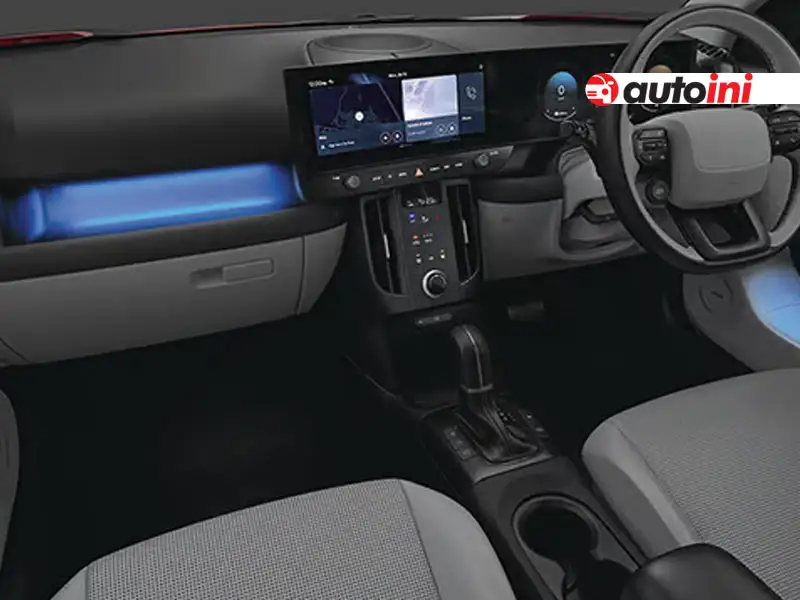
Technology is one of the main highlights of the Hyundai Bayon. Its Connected Car Navigation Cockpit combines digital displays, connected services, and voice-based controls to make everyday driving more convenient.
| Technology | Function |
|---|---|
| Dual Curved Panoramic Displays | Combines the digital instrument cluster and infotainment display in a modern dashboard layout. |
| Generative AI Voice Assistant | Supports natural-language conversations and can provide information about travel, weather, destinations, and other topics. |
| Hyundai Bluelink | Provides more than 70 connected-car features. |
| Controller Over-the-Air Updates | Supports software updates for up to 19 vehicle controllers, helping keep supported vehicle systems updated. |
| Wireless Smartphone Integration | Supports wireless Android Auto and Apple CarPlay. |
| Connected Navigation Cockpit | Integrates navigation, connected services, digital displays, and vehicle information. |
| Multilingual Interface | Supports 10 regional and two international languages. |
| Voice Commands | Supports more than 500 embedded voice commands. |
Hyundai Bayon Safety Features and ADAS
The Hyundai Bayon combines standard safety equipment with advanced driver assistance technology. While basic safety features are available across the range, some advanced systems depend on the selected variant.
| Safety Feature | Purpose |
|---|---|
| Six Airbags | Provides additional occupant protection in certain types of collisions. |
| Electronic Stability Control (ESC) | Helps maintain vehicle stability when the vehicle begins to lose control. |
| Hill-start Assist Control (HAC) | Helps prevent the vehicle from rolling backwards when starting on an incline. |
| Tyre Pressure Monitoring System (TPMS) | Monitors tyre pressure and alerts the driver to certain pressure-related issues. |
| Hyundai SmartSense Level 2 Pro ADAS | Provides a package of 23 advanced driver assistance functions. |
| Highway Driving Assist (HDA) | Helps the driver maintain appropriate speed and distance and assists with lane positioning under supported conditions. |
| Navigation-based Smart Cruise Control | Uses navigation information to help adjust cruise-control behaviour in supported road conditions. |
| Surround View Monitor (SVM) | Provides a surrounding camera view to assist with parking and manoeuvring. |
| Blind-spot View Monitor (BVM) | Displays camera views of certain blind-spot areas to help the driver check surrounding traffic. |
| All-wheel Disc Brakes | Provides disc brakes at all four wheels on applicable configurations. |
Note: Equipment availability may vary by variant. Advanced driver assistance systems are designed to support the driver and do not replace attentive driving. Specifications listed above refer to the Indian-market Hyundai Bayon.
ALSO READ
BYD Atto 8 Indonesia: Expected Price, Specs & Launch Date
Hyundai Bayon Price in IDR: Should Indonesian Buyers Be Interested?
The estimated Rp190.5 million conversion makes the Bayon an interesting model to follow, particularly for readers researching compact SUVs and international car prices.
However, there is currently no confirmed Indonesian retail price in the information covered by this report. There is also no basis for assuming that the Indian variant will be introduced locally with identical equipment.
If Hyundai eventually considers the Bayon for Indonesia, its positioning would depend on local pricing, safety equipment, engine specifications, warranty coverage, and competition from established compact SUVs.
For Indonesian consumers, the most useful approach is to compare the converted price with the actual prices of vehicles officially sold in the country. Differences in taxes, equipment, and after-sales support can make two vehicles with similar international prices very different ownership propositions.
Frequently Asked Questions About the Hyundai Bayon
What is the Hyundai Bayon price in IDR?
The estimated price is around Rp190.5 million based on the Indian starting price. This is a currency-converted reference figure, not an official Indonesian price. The final cost could differ substantially if the vehicle is introduced in Indonesia.
What are the Hyundai Bayon specifications?
The Indian-market model measures 4,245 mm long, 1,810 mm wide, and 1,605 mm high, with a 2,600 mm wheelbase. It offers 205 mm of ground clearance and a 1,497 cc petrol engine producing 115 PS.
What Hyundai Bayon features are available?
Depending on the variant, highlights include dual 12.3-inch displays, wireless smartphone connectivity, ventilated front seats, a panoramic sunroof, six airbags, and Level 2 Pro ADAS with 23 driver assistance functions.
What Hyundai Bayon engine does the Indian model use?
The Indian version has a 1.5-litre four-cylinder MPi petrol engine producing 115 PS and 143.8 Nm. Transmission options include a six-speed manual and an Intelligent Variable Transmission.
Is the Hyundai Bayon launched in Indonesia?
The Indian launch does not confirm an Indonesian launch. Indonesian buyers should wait for an official local announcement before assuming the Bayon will be sold in the country or estimating its final showroom price.
Conclusion
The Hyundai Bayon launched in India at an introductory price equivalent to approximately Rp190.5 million. Its 115 PS petrol engine, modern digital cockpit, and advanced safety equipment make it a noteworthy addition to India’s compact SUV market.
For Indonesian readers, the most important distinction is that the converted price is not an official local price. Taxes, import costs, and market-specific equipment could change the figure substantially.
The Bayon is therefore a model worth watching, but its potential appeal in Indonesia will depend on whether Hyundai introduces it locally and how it is priced against existing compact SUVs.