JAKARTA – Indonesia’s automotive sector has gone through a lean period lately, as reflected in the shrinking market share and sliding sales of automobiles. Part of this downtrend can also be attributed to the eroding middle class very vital stratum of automobile sales. Academics, on the other hand, see an expedient mix of government incentives and industrialization as essential for the revival of growth and sustainability in the sector.
We have to shift our focus from consumption to production. With industrialization, we can not only increase state revenue but also create a strong and sustainable industrial ecosystem.
Yannes Martinus Pasaribu
Shrinking Middle Class-Reason for Decline in Auto Sector Performance
Data from the Indonesian Central Statistics Agency, BPS, shows that from 57.33 million in 2019, the middle-class population of the country greatly declined to 47.85 million in 2024. A sharp decline that directly affects the consumption pattern of people, including automotive.
ITB automotive expert Yannes Martinus Pasaribu said that the decline in recent years has become a worrying trend within the last 15 years, where efforts to boost sales have often resulted in just temporary increases. “Big automotive events such as GIIAS give a brief boost to sales performance, but it is not sustainable,” said Yannes on Monday, September 9, 2024.
Incentives with Industrialization: A Proposed Strategy
He believes that such revitalization of Indonesia’s automobile sector can be brought about through a two-prong approach: government incentives along with healthy industrialisation drives. This, he holds, is required for bringing added value as well as introducing new jobs.
Industrialization-Path to a Sustainable Automobile Sector
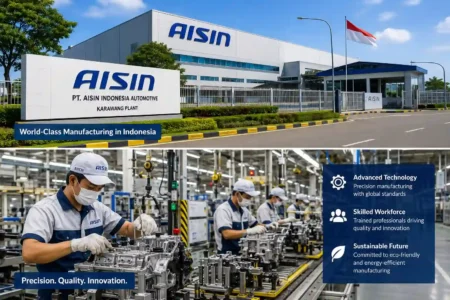
According to Yannes, industrialisation converts raw or unfinished materials into a finished product with much greater added value. Indonesia is rich in nickel that can be used to produce batteries for EVs. It would raise the product value manifold while developing associated industries and supply chains.
Yannes further expounded, “Through industrialization, particularly in vehicle components and related industries, multiplier effects can be created to permeate a wide field of economic endeavors. This would also make Indonesia an integral part of the world’s automotive supply chain.”
Government Incentives: A Much-Needed Boost for the Auto Industry
While industrialization is a long-term solution, government incentives can provide immediate relief to the suffering automotive sector. These include tax breaks, reduced import tariffs on raw materials, or subsidies for electric vehicle production that make the business of manufacturing and consuming more appealing.
Yannis insisted that these incentives must be aligned with industrial policies to ensure the promotion of local production and reduce Indonesia‘s reliance on imports. “We have to create an environment where both domestic and foreign manufacturers see Indonesia as a production base for automobiles, not just as a market for consumption,” he added.
The Urgent Need for Action
This decline in middle-class people further underlines the need for concrete initiatives with a view to rejuvenate the Indonesian automotive industry. For this target to be achieved, the incentive package must be published and the industrial development clearly oriented by the government. The whole strategy, in turn, requires coordination among different stakeholders of policy framers, manufacturers, and on-ground industrial experts.
KEY FEATURES
- Focusing on both immediate and long-term solutions to revive the auto sector.
- Highlighting opportunities like converting nickel to EV batteries and fostering local production of vehicle components.
- Linking the shrinking middle class to reduced consumer spending in the automotive market.
- Importance of government support through incentives and industry-friendly policies.