China’s EV infrastructure leader Orange Charging, an affiliate of ride-hailing giant Didi, has unveiled the world’s most powerful 1,600 kW EV supercharger—a bold step designed to redefine future EV charging standards. This liquid-cooled, megawatt-class charger marks a new chapter in the China EV market, packed with implications for drivers, grids, and battery technology.
Also read: Chery Tiggo 8 CSH Battery Survives 53-Hour Flood Test in Jakarta
Why China is pushing ultra-fast charging
China is rapidly expanding its EV ecosystem with over 2.7 million public chargers, including fast and ultra-fast units.. But the push for ultra-fast charging isn’t only about quantity—it’s about solving range anxiety and making EV refueling as convenient as filling a gas tank. By deploying a 1,600 kW supercharger, China moves toward that vision, making multi-hour charging sessions a thing of the past.
How the 1,600 kW EV supercharger works
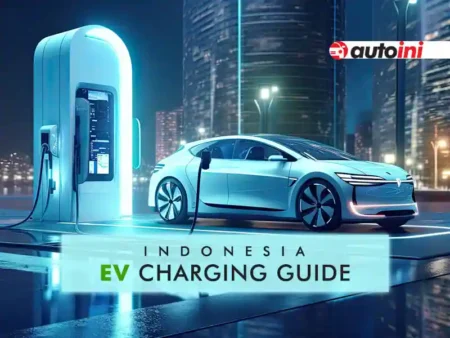
This megawatt charger provides 1.6 MW of power through liquid-cooled cables and is very different from standard fast chargers (50–350 kW) in that it leverages a smarter, more innovative load-balancing system to dynamically distribute power among the vehicles, while always providing the fastest possible charge supported by the vehicle. Early testing has shown that it can provide about 62 miles (≈100 km) of range per minute charging time, meaning about 400 km of range in just 5 minutes—similar to the claims made by other MW-class stations.
Why this is a game-changer for electric car batteries
Rapid charging can stress battery life. But this charger is paired with intelligent management systems that throttle power based on battery conditions. Leading battery makers like BYD and CATL are also innovating electric car battery chemistries that tolerate fast power inputs without damage. This combined approach accelerates development of durable, high-power battery packs.
Also read: Gotion Aims for Battery Cell Production in Indonesia by 2027
Highlighted key points
- Record-breaking 1,600 kW supercharger by Orange Charging
- Can deliver 100 km of range in 1 minute, and 400 km in ~5 minutes
- Utilizes liquid-cooled cables and intelligent load management
- Situation: part of China’s vast EV charging network—2.7M+ chargers
- Complements new battery tech from BYD, CATL, Zeekr
Who this benefits, and how
- EV drivers will see dramatically reduced charging stops, enabling long-distance travel with minimal delay.
- Automakers and infrastructure operators can pilot MW-charge as a blueprint for future networks.
- Grid managers are encouraged to innovate with energy storage and demand-balancing systems, essential to handle the massive power draw..
Why this matters globally
China’s megawatt flashes are more than local tech trials—they spotlight what the future EV charging landscape may look like. As automakers design cars that can safely accept up to 1.6 MW, global networks will follow suit. For countries like Indonesia, aligning with this shift could fast-track EV growth and reduce dependency on fossil fuels.
Key Challenges Ahead
- Grid capacity – A single charger draws power comparable to a neighborhood, requiring advanced energy storage or local upgrades.
- Cost – Each unit can cost $11,000–$17,000, excluding installation and maintenance.
- Battery health – Long-term effects of megawatt charging remain under study, and battery makers are racing to adapt.
Also read: Geely Claims Its New EV Battery Can Last 1 Million KM
Conclusion: Charging into the future
China’s 1,600 kW EV supercharger launch is a significant step forward in our future realities for EV charging. Automakers, battery makers, and infrastructure planners have to rethink their ambitions and think bigger toward a station-like, seamless EV experience. Sure, cost, grid capacity, and battery life remain clear challenges, but this has been a strong first demonstration and vision for a world where EV traveling will soon be as convenient as petrol, all thanks to robust and intelligent charging.
Frequently Asked Questions
What is ultra-fast charging and how does it work?
Ultra-fast charging is defined as speeds greater than 350 kW. This 1,600 kW supercharger can deliver up to 100 km range in a minute by using chilled, intelligent systems, and safely transferring high amounts of power.
How does this impact the China EV market?
The China EV market accelerates global competition by pioneering infrastructure that encourages consumers to go electric, driving faster adoption and tech innovations.
What effect does this have on electric car battery durability?
New electric car battery technologies and smart safety software help manage heat and stress, aiming to preserve battery health even with rapid charging.