Autoini.com – Floods are becoming more common in many cities, especially during the rainy season. With the rapid growth of electric vehicles (EVs), more drivers are asking one important question: Are EVs safe in floods?
Many believe EVs are safer because they do not have an air intake system that can cause hydrolock like a gasoline engine. However, there are still limits and important safety rules every EV owner should understand.
How Electric Vehicles Handle Flood Water
Most electric vehicles are built with strong water-resistant protection. The high-voltage battery pack and power cables are sealed so water does not easily enter. Some EV components even have special ratings that show their resistance to dust and splash.
This helps increase electric vehicles flood safety during shallow water or when passing through light floods. However, this does not mean EVs can survive all types of floods. Long exposure to water, strong currents, or deep submersion can still cause damage.
ALSO READ
Jakarta Becomes the World’s Largest City: 23 Million Vehicles and Endless Traffic Woes
Safe Water Depth for Driving EVs in Flood
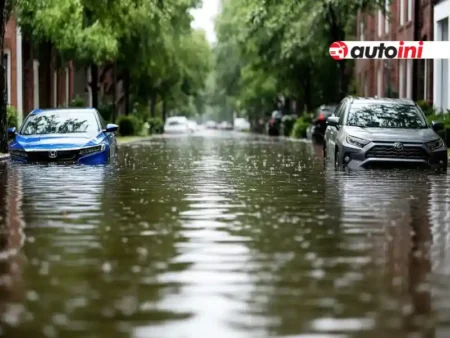
Experts generally suggest avoiding water deeper than the bottom of the wheel hub. Once water reaches the underbody, it can start touching sensitive parts like sensors, brakes, and connectors. Driving EVs in flood deeper than this level can cause serious trouble.
If the water is shallow and the car keeps moving at slow speed, the chance of problems remains low. But stopping in the middle of a flood allows more water pressure and may lead to leakage into hidden parts.
EV Waterproof Battery: What You Must Know
The battery pack is the most expensive component in an EV. Manufacturers seal it tightly using strong insulation technology. It is designed to stay protected even when water splashes over it during heavy rain.
However, if the battery is submerged too long, it can still get water intrusion. This may damage internal circuits, reduce battery quality, and in rare cases trigger thermal reactions. After any flooding, inspection is highly recommended.
EV Flood Risk and Common Damages
Even with water-resistant technology, EVs are not fully waterproof. Floodwater can damage systems that are not designed for submersion. Some common issues include:
- Short circuit in electrical connectors
- Corrosion in underbody parts
- Sensor malfunction
- Brake system problems after exposure
- Reduced battery insulation quality
If an EV becomes submerged, do not turn it on. The vehicle should be checked by authorized service technicians before restarting.
Latest Technical Findings (2025)
Automotive engineers confirm that EVs can handle rain or shallow water better than many gasoline cars. But they strongly warn drivers to avoid deep floods because monitoring water sealing is difficult in real-world conditions.
As of 2025, there is still no EV that is fully guaranteed flood-proof. The best protection always depends on how the driver reacts during flood conditions.
ALSO READ
Is Jakarta’s Odd–Even Rule Fueling a Massive EV Buying Surge?
Comparison Table: EV vs Gasoline Car in Flood
| Feature | Electric Vehicle (EV) | Gasoline Car (ICE) |
|---|---|---|
| Risk of engine stall | Lower | High (hydrolock risk) |
| Electrical system exposure | Protected but vulnerable if submerged | Can short easily if water enters engine bay |
| Recovery after flood | More expensive and requires experts | Generally cheaper repairs |
| Fire risk | Low but serious if battery gets damaged | Moderate fuel-related risk |
Conclusion
So, are EVs safe in floods? Yes — but only up to a limit. EVs are designed with stronger water protection than most traditional vehicles, especially in shallow flood conditions. However, once the water becomes deep or the vehicle is fully submerged, the risk increases significantly.
To stay safe, avoid deep floodwater whenever possible, keep your speed slow when passing through shallow areas, and always let experts inspect your EV if it has been underwater. With proper caution and awareness, EV ownership remains a smart and safe choice — even in a flood-prone country like Indonesia.
FAQs
Can driving EVs in flood damage the battery?
It can if the water level is too high or the car stays submerged too long. While the battery is sealed, long exposure increases the chance of damage and corrosion.
What is a safe depth for electric vehicles flood safety?
Water should stay below the wheel hub height. Going above that level increases the risk to sensors and underbody components.
How to minimize EV flood risk during rainy season?
Avoid flooded roads whenever possible, drive slowly through shallow water, and never restart the car after submersion until it is checked by experts.

MUST READ
Changan Officially Enters Indonesia With Two New EV Models
Chinese automaker Changan launches Lumin and Deepal S07 in Indonesia through Indomobil